Before we were a school-supplies organization, we were a lot of things. We were a barbecue on the corner. A potluck for families after a hard week. A friend dropping off a plate. Food has been part of how we've shown up since day one — and we think it always should be.
The science is clear
Hungry kids can't learn. Hungry parents can't plan. When you remove the question of "what are we eating tonight?" from a family's mind, you free them to think about the next thing — school, work, the future.
- Children experiencing food insecurity are more likely to fall behind grade level.
- Meal-stress in parents measurably reduces decision-making capacity.
- A single predictable meal per week has been shown to improve school attendance.
"You don't hand a kid a pencil and walk away. You feed them, ask their name, and let them know they're welcome." — Ronald Adams
What "serving a hot meal" actually looks like here
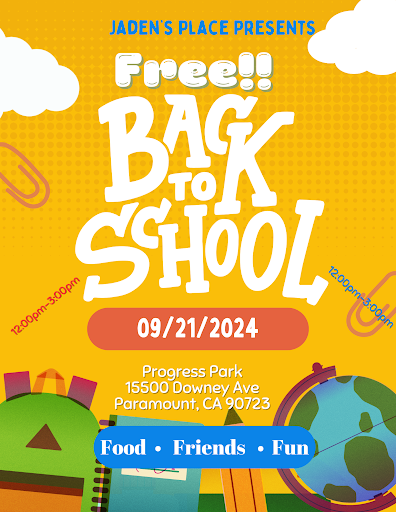
At back-to-school drives
We set up a grill line. Hot dogs, rice bowls, fresh fruit, water. Not a cafeteria line — a neighborhood BBQ. Kids eat first. Parents eat with them. Volunteers eat alongside.
At seasonal food distributions
Thanksgiving and winter, we hand out full meal bags — turkey or ham, sides, bread, dessert. Enough for a family to cook a real meal on a real holiday.
At every event
If a kid is there, a plate is available. No questions, no intake form.
It's cheaper than you think
One of our longtime partners estimates we feed a family of five for under $15. That's less than a fast-food run — and it's a hot, homemade plate served by a neighbor.
A $50 donation feeds a family for a full week.
The real reason we do it
Because food is how we tell people they belong. It's the oldest language of community. And our mission isn't just to remove barriers — it's to rebuild the kind of neighborhood where a family never has to ask whether they're wanted.